
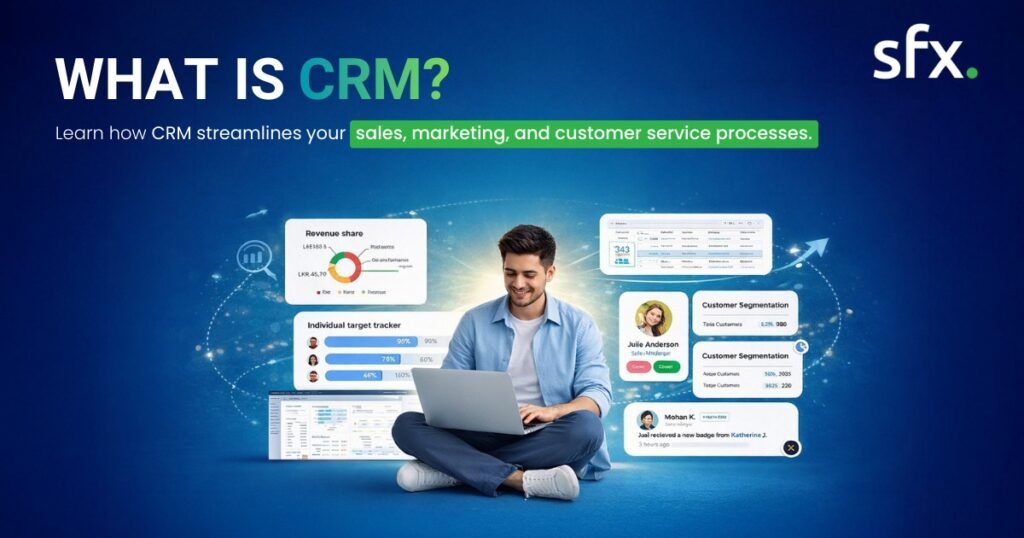
CRM software has become the backbone of modern business operations, but many people still wonder what it actually does and why it matters. If you’re a small business owner, entrepreneur, or professional looking to better understand customer relationship management technology, this guide breaks down everything you need to know.
A CRM system helps businesses organize customer information, track every interaction, and build stronger relationships that drive sales growth. Think of it as your digital command center for managing all customer-related activities across your entire organization.
This beginner’s guide will walk you through the core types of CRM systems available and the essential features that make them so powerful for business success. You’ll also discover the key benefits that explain why companies of all sizes are investing in CRM technology to stay competitive and grow their customer base.
Understanding CRM: Definition and Core Purpose
What CRM stands for and its primary function
CRM stands for Customer Relationship Management, which represents a strategic process that organizations use to manage, analyze, and improve their interactions with customers. At its core, CRM is a system for managing all of your company’s relationships and interactions with current and potential customers, with the ultimate goal being simple: improve relationships to grow your business.
The primary function of CRM technology is to help companies stay connected to customers, streamline processes, and improve profitability. When people talk about CRM, they’re usually referring to a CRM system—software that helps track each interaction you have with a prospect or customer, including sales calls, customer service interactions, marketing emails, and much more.
CRM’s ultimate aim is to improve customer satisfaction by enabling personalized offerings, timely processing, and effective relationship management, which increases customer loyalty and reduces complaints and defections. The primary goal of CRM systems focuses on integration and automation of sales, marketing, and customer support, providing businesses with a comprehensive view of their customer relationships.
How CRM acts as a digital filing cabinet for customer data
Think of CRM as a sophisticated digital filing cabinet that organizes and stores all your customer information in one secure, accessible location. CRM systems compile data from a range of different communication channels, including a company’s website, telephone, email, live chat, marketing materials, and social media platforms.
This digital repository stores customer and prospect contact information such as email addresses, telephone numbers, social media handles, and records of all previous interactions with your company. Unlike traditional filing systems, CRM provides a single source of truth—a clear, unified customer profile that creates a simple, secure, and customizable dashboard displaying each customer’s purchase history, order status, outstanding customer service issues, and more.
The system acts as a centralized data warehouse, aggregating transaction information and providing key performance indicators (KPIs) that help businesses make informed decisions. This comprehensive data storage capability ensures that whether customers have previously reached out via phone, chat, email, or social media, everyone at your company can access the complete customer history and provide the expected level of service.
The role of CRM in managing customer relationships and interactions
CRM plays a crucial role in managing the complete spectrum of customer relationships and interactions throughout the entire customer lifecycle. The system enables businesses to learn more about their target audiences and how to better cater to their needs, thus retaining customers and driving sales growth. CRM may be used with past, present, or potential customers, encompassing all concepts, procedures, and rules that a corporation follows when communicating with its consumers.
From a practical standpoint, CRM manages customer relationships through three main operational components: sales force automation, marketing automation, and service automation. Sales force automation works with all stages in the sales cycle, from entering contact information to converting prospects into clients, while preventing duplicate efforts across departments. Marketing automation focuses on making marketing processes more effective through automated tasks like email campaigns and social media posts. Service automation supports customer service through multiple channels such as phone, email, knowledge bases, and ticketing portals.
The system facilitates sharing customer information across departments and external stakeholders like suppliers and vendors, helping to enhance customer engagement and business efficiency. Through analysis of customer data using techniques like data mining, pattern recognition, and correlation, CRM enables businesses to improve customer service and make more informed strategic decisions. This comprehensive approach to relationship management ensures that every interaction is informed, personalized, and contributes to building stronger, more profitable customer relationships.
Types of CRM Systems Available
On-premise CRM solutions and their characteristics
On-premise CRM solutions are software systems installed and running directly on a company’s local servers and computers. These traditional customer relationship management tools require in-house IT staff for setup, maintenance, and troubleshooting, giving businesses complete control over their CRM infrastructure.
The key characteristics of on-premise CRM solutions include enhanced control and customization capabilities. Since the software is installed directly onto your company’s servers, businesses can customize it extensively to match their specific operational needs. This level of customization often exceeds what cloud-based solutions can offer.
Data security represents another significant advantage, as all information remains within the company’s premises, providing increased protection over data privacy and security. The one-time purchase model can also be more cost-effective in the long run for businesses with the in-house expertise to manage and maintain the system.
Performance benefits include faster data retrieval and system response times due to direct access to your own servers. Additionally, managing data storage and access in-house makes it easier to comply with industry-specific regulations and requirements.
However, on-premise solutions come with notable disadvantages. Higher initial costs are required for hardware, software, and IT infrastructure. All system maintenance, updates, and troubleshooting responsibilities fall on the company’s IT team. Scalability can be challenging, as expanding the system or adding users may require additional hardware or IT resources. Remote access is also more limited, typically requiring VPN connections.
Popular examples of on-premise CRM systems include Microsoft Dynamics CRM, SAP CRM, and Oracle CRM.
Cloud-based CRM platforms and their advantages
Cloud CRM platforms are software systems for managing customer experiences and interactions hosted online. With cloud-based solutions, businesses centralize customer data, streamline processes, and facilitate communication, with all data accessible via the internet without requiring on-premises hardware.
The primary advantages of cloud-based CRM platforms center around accessibility and flexibility. These systems can be accessed from virtually any location at any time with internet connectivity, making them ideal for today’s mobile workforce. Real-time collaboration features enable global teams to work together efficiently with the most recent customer data.
Cost-effectiveness represents a major benefit, as cloud CRM eliminates the need for expensive on-site hardware and IT maintenance. The subscription-based SaaS model offers more flexibility with monthly or quarterly payments instead of large upfront investments, freeing up cash flow and lessening financial risk.
Scalability is another key advantage, as both small business startups and expansive enterprises can easily adjust their usage based on current requirements without massive overhauls. The systems adapt seamlessly to company growth, allowing for additional users or features as needed.
Cloud platforms also provide robust data protection and regular backups, with CRM vendors maintaining cloud servers, mandating safety and encryption protocols, and backing up customer data. This adds an extra layer of security and prevents data loss if devices are lost or crash.
Implementation is typically faster since there’s no hardware or equipment to install, reducing downtime and capital expenses. Feature updates occur automatically and remotely, ensuring employees always have access to the most up-to-date capabilities.
Popular cloud CRM examples include Salesforce, HubSpot CRM, and Zoho CRM.
Mobile CRM systems for on-the-go teams
Mobile CRM systems represent a crucial component of modern customer relationship management, particularly valuable for teams that need to conduct business on the go. These systems enable employees to access real-time customer data using mobile devices from any location – whether at home, in the office, in the field, or anywhere with an internet connection.
The mobility aspect is especially critical in today’s work environment where remote access ensures customer data stays up-to-date and timely. Cloud-based mobile CRM solutions enable all employees, including service technicians, sales reps, and dispatch teams, to input and access customer data from mobile devices rather than being tethered to the office.
This real-time access capability allows field workers to make immediate updates to customer records, eliminating the inefficiency of calling the office to relay information. Mobile CRM systems ensure that data updates occur whenever a technician enters a customer note or a sales representative closes a deal, providing all team members with the most accurate information at their fingertips.
In contrast, server-based or on-premise CRM solutions offer limited mobility, typically requiring VPN connections for remote access. This restriction often forces technicians to call the office to relay customer data, wasting time and potentially creating poor user experiences.
The mobile functionality of cloud CRM platforms makes them particularly suitable for businesses with field operations, remote teams, or sales forces that travel frequently. This accessibility ensures seamless operations regardless of location while maintaining data accuracy and real-time synchronization across all team members.
Operational, analytical, collaborative, and strategic CRM types
While the reference content primarily focuses on deployment models (cloud vs. on-premise) and mobile accessibility, it provides insights into the operational aspects of different CRM types through practical applications and use cases.
Operational CRM functionality is evident in the systems’ ability to manage day-to-day customer interactions and business processes. The reference content highlights how CRM solutions centralize customer data, streamline processes, and facilitate communication across different business units while maintaining integration capabilities.
The analytical capabilities of modern CRM systems are demonstrated through their real-time data access and reporting features. Business owners can conveniently access real-time customer data, check technician performance, and track marketing efforts from the office or field. This analytical functionality ensures data accuracy and enables informed decision-making based on current customer information.
Collaborative features are emphasized through the real-time collaboration capabilities that help global teams work together efficiently with the most recent customer data. Cloud-based systems particularly excel in this area, enabling seamless information sharing and communication across different departments and locations.
Strategic CRM aspects are reflected in the scalability and integration capabilities mentioned in the reference content. These systems can adapt to business growth, integrate with other cloud-based tools to build cohesive business ecosystems, and support long-term business planning through comprehensive customer relationship management.
The integration capabilities allow CRM systems to connect effortlessly with direct mail, email marketing, project management, financial reporting tools like QuickBooks, invoicing, billing, and other essential business applications, supporting strategic business operations and growth initiatives.
Essential CRM Features That Drive Business Success
Contact management and customer data storage
Contact management serves as the foundation of any effective CRM system, acting as a centralized hub for all customer information. This core functionality helps businesses access and organize crucial details about current and potential customers, including email addresses, phone numbers, websites, and social media profiles gathered through various touchpoints.
Modern CRM systems eliminate data silos by housing all customer, sales, service, marketing, and analytics details in one unified location. This creates a single source of truth that allows any team member to quickly access comprehensive customer information. When customer data is scattered across different systems, it becomes challenging to maintain current information and deliver personalized experiences.
AI enhancement transforms traditional contact management by continuously cleaning and enriching data, identifying inconsistencies, and automatically merging duplicate records. Predictive analytics helps identify data gaps and suggests information to collect for better customer insights. This automated approach ensures that contact databases remain accurate and up-to-date without manual intervention.
The system also provides calendar integration and follow-up reminders, along with detailed interaction notes that any team member can access. This comprehensive view enables sales teams to see when customers interact with marketing campaigns or if they have open service cases, creating better context for every customer interaction.
Communication history tracking across all channels
Omnichannel support has become essential as customers expect consistent experiences across phone, chat, social media, and email interactions. A robust CRM with comprehensive communication tracking provides customer representatives with a complete view of each customer’s history across all channels, enabling informed and elevated service experiences.
This unified communication history allows representatives to leverage knowledge of past purchases, service calls, and interactions to deliver personalized support and identify potential upsell opportunities. The system automatically captures and organizes every touchpoint, creating a chronological timeline of customer engagement that’s accessible to all team members.
AI enhances communication tracking by analyzing patterns across multiple touchpoints and identifying trends in customer behavior. This intelligent analysis helps predict customer needs and suggests optimal communication timing and channels for maximum effectiveness.
Integration capabilities ensure that conversations from various platforms flow seamlessly into the centralized communication history. Whether customers reach out through social media, email, phone calls, or live chat, every interaction is automatically logged and made available to relevant team members, eliminating the need to search for previous conversation details.
Sales process optimization and pipeline management
Sales opportunity management, also called pipeline management, supports organizations in tracking opportunities throughout their entire lifecycle. This functionality enables teams to optimize interactions with potential buyers by providing clear visibility into deal progression and performance metrics.
Modern CRM systems help capture and manage leads, organize sales across territories, track individual and team performance, and identify next best steps using predictive AI. Sales forecasting capabilities assist with lead qualification while offering better visibility into sales performance relative to established goals, giving managers insight into individual performance to identify challenges and opportunities.
AI significantly improves sales forecasting accuracy by analyzing patterns across multiple variables, including seasonal trends, individual sales rep performance, and market conditions. This intelligent analysis helps sales teams focus their efforts on the most promising opportunities while identifying potential risks early in the process.
Pipeline management tools provide visual representations of deal progression, automated task assignments, and workflow management that keeps teams moving forward efficiently. Weekly reminders can be automatically sent to employees for status updates and customer note maintenance, while submission workflows facilitate cross-team collaboration for IT support or legal reviews.
Customer behavior analysis and insights
Advanced reporting and analytics features transform raw customer data into actionable business insights through customizable dashboards and automated reports. CRM analytics provide clear visibility into important customer information, displaying what’s needed to improve relationships and boost sales performance.
AI enhances analytics capabilities by identifying trends that might not be immediately obvious to human analysts and predicting future customer behaviors and outcomes. Machine learning algorithms can analyze customer interaction patterns, purchase history, and engagement levels to provide deeper insights that drive business growth.
Customer behavior analysis includes tracking multi-channel engagement data, monitoring how customers interact with various touchpoints, and understanding their preferences and pain points. This comprehensive analysis helps businesses anticipate customer needs, personalize interactions, and optimize the customer journey.
The system can automatically generate insights about customer lifetime value, churn risk, and cross-selling opportunities. These predictive capabilities enable proactive customer management, allowing businesses to address issues before they escalate and identify the most valuable customer segments for targeted attention.
Marketing automation and campaign management
Campaign management functionality makes marketing more effective by enabling teams to plan, execute, and measure marketing campaigns across multiple channels and customer segments from a single interface. Modern CRM systems integrate comprehensive marketing automation tools that streamline campaign creation and execution.
AI transforms campaign management by automatically generating personalized content, optimizing send times based on customer behavior patterns, and segmenting audiences using data and previous engagement history. The system can create targeted campaigns based on performance metrics and continuously optimize messaging for better results.
Engagement marketing, also called journey orchestration, creates cohesive customer journeys and automates experiences across multiple touchpoints. This ensures consistent and personalized interactions throughout the customer lifecycle, from initial contact through purchase and beyond.
Marketing automation capabilities include automated email responses, drip campaigns, lead nurturing sequences, and personalized content delivery. The system can automatically trigger marketing actions based on customer behaviors, such as website visits, email opens, or purchase activity, ensuring timely and relevant communication.
Reporting and analytics capabilities
Comprehensive reporting capabilities are essential for understanding CRM performance and making data-driven decisions. Modern CRM systems include customizable reporting features that help optimize sales processes and marketing efforts through detailed analytics and key performance indicators.
Advanced reporting transforms complex customer data into clear, actionable insights through visual dashboards and automated report generation. These capabilities enable teams to track progress against goals, identify trends, and make informed strategic decisions based on real-time data.
AI-powered analytics can automatically identify patterns in customer data, predict future trends, and generate recommendations for improving business performance. The system can create automated reports that highlight key metrics, flag potential issues, and suggest optimization opportunities.
Security features ensure that sensitive reporting data is protected through encryption, access controls, and compliance measures. Role-based access controls guarantee that team members only see information relevant to their roles, while AI-powered monitoring watches for suspicious activity to maintain data integrity and customer trust.
Key Benefits of Implementing a CRM System
Improved Customer Satisfaction and Personalized Experiences
CRM systems fundamentally transform how businesses interact with their customers by centralizing all customer data, communications, and service records in one unified platform. This comprehensive view enables teams to provide personalized experiences that significantly boost customer satisfaction levels. When customers contact your business, representatives can instantly access their complete history, preferences, and previous interactions, eliminating the frustration of having to repeat information multiple times.
The system’s ability to track customer preferences and behaviors allows businesses to tailor their services and communications to individual needs. This personalization extends beyond basic service interactions to include targeted marketing campaigns, customized product recommendations, and proactive support based on historical patterns. As a result, customers feel valued and understood, leading to higher satisfaction scores and stronger brand loyalty.
Increased Sales Efficiency and Revenue Growth
CRM systems deliver substantial improvements in sales performance through enhanced efficiency and revenue generation capabilities. Sales teams benefit from automated processes that eliminate time-consuming manual tasks, allowing them to focus more on actual selling activities. The centralized database provides immediate access to customer and product information, enabling representatives to create more relevant and compelling sales presentations tailored to each prospect’s unique needs.
Research indicates that businesses implementing CRM systems typically experience significant revenue increases, with some organizations seeing returns of 525% or more on their CRM investment. The system’s lead management capabilities ensure that every prospect receives first-class treatment through detailed tracking of interactions, marketing campaign engagement, and website browsing activities. This comprehensive approach to lead nurturing results in higher conversion rates and increased average deal sizes.
Sales forecasting features help businesses plan more effectively, optimizing staffing and resource allocation to maximize revenue opportunities. The system’s ability to track sales productivity metrics such as calls, meetings, and quotes sent provides managers with actionable insights to improve team performance continuously.
Enhanced Team Collaboration and Data Accessibility
Modern CRM systems break down departmental silos by providing a single, reliable dataset accessible to all team members regardless of their physical location or time zone. This cloud-based accessibility ensures that sales, marketing, and customer service teams can collaborate effectively, sharing information seamlessly to deliver consistent customer experiences.
The centralized nature of CRM data prevents redundant efforts and ensures that all team members have access to the most current customer information. When delivering products or services that require input from multiple departments, this unified approach becomes crucial for maintaining efficiency and avoiding miscommunication. Teams can easily share documentation of customer interactions, assign tasks, and track progress, ensuring that nothing falls through the cracks.
This enhanced collaboration extends beyond internal teams to include external vendors and partners who may need access to specific customer information for order fulfillment or service delivery purposes.
Better Customer Retention and Loyalty Building
CRM systems significantly impact customer retention by enabling businesses to provide superior customer service and maintain stronger relationships over time. The comprehensive tracking of customer interactions allows support teams to resolve issues more quickly and effectively, with many businesses seeing increases in same-day case resolution rates.
The system’s ability to monitor customer satisfaction levels through surveys and other metrics provides valuable insights into retention risks and opportunities. Automated renewal features ensure that important dates don’t slip by, helping maintain continuous relationships with existing customers. Customer retention improvements of just 5% can boost profits by 25-95%, making this one of the most valuable benefits of CRM implementation.
Cross-selling and upselling capabilities built into CRM systems help maximize the value of existing customer relationships by identifying opportunities based on purchasing patterns and customer needs analysis.
Streamlined Business Processes and Workflow Automation
CRM systems excel at automating repetitive, manual processes that traditionally consume significant time and resources. Automated order fulfillment capabilities can trigger the entire fulfillment process the moment a customer places an order, coordinating with both internal teams and external vendors seamlessly. This automation reduces the potential for human error while accelerating delivery times.
Email follow-ups, receipt generation, and reporting processes can all be automated, freeing up staff time for more strategic activities. The system can automatically process payments, send invoices for renewals, and manage commission calculations, reducing administrative burden on accounting and management teams. Research shows that automation can reduce manual data entry by up to 80%, representing substantial time savings across the organization.
Quote delivery and modification processes become streamlined within the CRM environment, allowing for rapid responses to customer requests and changes. Web-to-lead forms can instantly capture prospect information and alert sales teams to hot leads, enabling immediate follow-up when conversion potential is highest.
Data-Driven Decision Making with Actionable Insights
CRM systems transform businesses into data-driven organizations by providing comprehensive analytics and reporting capabilities. Built-in dashboards present key performance indicators in easy-to-understand formats, enabling managers to track sales performance, efficiency metrics, and team productivity in real-time. This visibility allows for quick identification of trends, opportunities, and potential issues.
The system’s ability to track detailed customer segmentation provides insights into the behavior, value, and needs of different customer groups. This granular analysis enables more targeted marketing campaigns and personalized services that drive higher conversion rates. Revenue attribution by campaign allows businesses to fine-tune their marketing strategies and allocate resources more effectively.
Sales cycle efficiency metrics, including time to close and close rates, provide valuable insights for process optimization. The system can identify which approaches and activities correlate with successful outcomes, enabling continuous improvement in sales methodologies. Forecasting accuracy improvements of up to 32% help businesses plan more effectively and make informed strategic decisions based on reliable data rather than assumptions.
How CRM Systems Work in Practice
Setting up and customizing your CRM platform
The CRM implementation process begins with a comprehensive needs assessment to identify your business goals and requirements. This involves consulting with stakeholders across sales, marketing, customer service, commerce, and IT departments to gather all expectations and define the scope of your project.
Once you’ve chosen your CRM platform based on scalability, ease of use, and compatibility with existing systems, the customization phase begins. CRM software must be tailored to fit your specific workflows and processes, which involves adjusting settings, creating custom fields, and establishing user permissions. Modern AI-powered CRMs allow you to build team or task-specific AI agents that can autonomously execute tasks and surface valuable insights.
The integration component is equally crucial, as your CRM needs to connect seamlessly with other business tools like email, calendar, automation platforms, and customer service software. This creates a unified ecosystem where data flows smoothly between departments, reducing manual work and improving collaboration.
Collecting and inputting customer data effectively
Now that we’ve covered the setup phase, let’s examine how businesses collect and manage the four basic types of CRM data effectively. A well-structured CRM system stores identity data, descriptive data, quantitative data, and qualitative data to create comprehensive customer profiles.
Identity data includes essential customer details like full names, job titles, contact information, company names, industry types, and social media profiles. This foundational information helps businesses recognize and categorize individuals and companies accurately.
Descriptive data provides deeper insights into customer lifestyles, interests, and behaviors, including demographics, preferences, purchase history, and engagement levels. For example, a fitness brand might track workout routines and dietary habits to recommend tailored fitness plans.
Quantitative data consists of measurable interactions such as website traffic, email open rates, transaction amounts, purchase frequency, and customer service interactions. This data helps track trends and optimize engagement strategies.
Qualitative data captures customer opinions, emotions, and satisfaction levels through reviews, surveys, social media feedback, and chatbot interactions. A restaurant chain might analyze online reviews to identify service issues at specific locations.
To ensure data accuracy, businesses should implement standardized data entry practices with clear guidelines, use dropdown menus and predefined fields, require mandatory fields to prevent missing information, and establish data validation processes during entry.
Automating processes for maximum efficiency
With this in mind, next we’ll explore how automation transforms CRM efficiency. Manual data entry leads to errors and inefficiencies, making automation essential for maintaining data quality and streamlining operations.
CRM automation reduces mistakes by enabling auto-fill fields and automatic record updates. Automated data cleansing helps remove duplicate entries and outdated records, keeping your database clean and reliable. Setting up alerts for missing or inaccurate information prevents issues from escalating and ensures data integrity.
The data migration process exemplifies automation’s importance. When transferring data from legacy systems, automated tools ensure customer details, sales records, interactions, and support tickets move accurately without loss or corruption. This unified data platform enables AI tools to access and analyze information for delivering personalized experiences and informed business decisions.
Workflow automation extends beyond data entry to include email campaigns, lead scoring, task assignments, and follow-up reminders. For instance, when a prospect downloads a whitepaper, the CRM can automatically assign them to a sales representative, send a follow-up email, and schedule a reminder for the sales team.
Analyzing data to gain valuable customer insights
Previously, I’ve outlined how data collection and automation create the foundation for meaningful analysis. CRM analytics transforms raw data into actionable insights that drive business growth and improve decision-making.
AI-powered CRM tools analyze patterns across customer interactions, identifying trends that human analysis might miss. These systems can predict sales opportunities, segment customers for targeted marketing, and reveal behavioral patterns that inform strategy development.
Quantitative analysis helps businesses track performance metrics like email open rates, conversion rates, and customer lifetime value. If a company notices that emails with personalized subject lines have 30% higher open rates, they can implement this strategy across all campaigns.
Regular data audits ensure information remains accurate and useful. Businesses should schedule routine checks to identify duplicate records, outdated entries, and inconsistencies. Monitoring data trends helps spot recurring issues and address them proactively, maintaining the integrity of business insights.
The analytics process also involves tracking key data quality metrics to identify weak points in data collection and management processes. This continuous monitoring approach ensures that insights remain reliable and valuable for strategic planning.
Building stronger customer relationships through insights
Now that we have covered data analysis, let’s examine how these insights translate into stronger customer relationships. Clean, accurate CRM data enables businesses to personalize interactions, respond faster, and offer better service that builds long-term loyalty.
When businesses maintain comprehensive customer profiles, they can tailor communications based on past purchases, preferences, and engagement history. An e-commerce business might send personalized product recommendations to returning customers based on their previous buying behavior, rather than generic promotions.
CRM insights help businesses understand customer sentiment through qualitative data analysis. By tracking feedback from reviews, surveys, and social media interactions, companies can address concerns proactively and improve their offerings. A tech company analyzing software usability feedback can refine its interface based on user suggestions, leading to higher satisfaction rates.
The relationship-building process relies on timely, relevant communication enabled by CRM automation. When customer data triggers specific workflows – such as birthday reminders, purchase anniversaries, or support ticket follow-ups – businesses demonstrate attention to detail that customers appreciate.
Integration between CRM and other business systems ensures that customer-facing teams have access to complete interaction histories. This unified view enables support representatives to provide contextual assistance, sales teams to reference previous conversations, and marketing teams to create targeted campaigns based on comprehensive customer understanding.
Choosing the Right CRM System for Your Business
Evaluating Customization and Flexibility Requirements
Before diving into vendor selection, businesses must thoroughly assess their customization needs and flexibility requirements. Start by analyzing your existing business processes and identifying areas where standard CRM functionality may not align with your unique workflows. Consider whether you need custom fields, modified user interfaces, or specialized reporting structures that reflect your industry-specific requirements.
The level of customization required directly impacts your deployment method decision. If your business demands highly specific features or unique workflow configurations, you may need to consider on-premise solutions that offer maximum customization potential. However, cloud-based systems have evolved to provide substantial customization options while maintaining easier implementation and maintenance.
Document your customization requirements by categorizing them as essential versus desirable. Essential customizations are those without which your business processes cannot function effectively, while desirable customizations enhance efficiency but aren’t critical for operations. This classification helps prioritize features during vendor evaluation and prevents scope creep during implementation.
Considering Scalability for Future Business Growth
Scalability planning extends beyond simply adding more users to your CRM system. Evaluate how your data volume, transaction complexity, and integration requirements might evolve as your business grows. Consider whether your chosen CRM can handle increased contact databases, expanded product catalogs, and more sophisticated sales pipelines without performance degradation.
When forecasting scalability needs, examine your business growth trajectory over the next three to five years. Factor in potential expansion into new markets, additional sales channels, or increased team sizes. Cloud-based CRM systems typically offer more flexible scaling options with per-user pricing models, while on-premise solutions may require significant infrastructure investments for expansion.
Assessment of scalability should also include the system’s ability to adapt to changing business models. As companies evolve, their CRM needs often shift from simple contact management to comprehensive customer relationship orchestration, requiring platforms that can grow with these expanding requirements.
Assessing Integration Capabilities with Existing Tools
Integration capabilities represent a critical factor in CRM selection, as most businesses rely on multiple software applications for daily operations. Your CRM should seamlessly integrate with existing email platforms, accounting systems, ERP solutions, project management tools, and other business-critical applications to ensure cohesive data flow across your technology ecosystem.
Evaluate both pre-built integrations and the platform’s ability to support custom integrations through APIs. Consider the technical requirements for maintaining these integrations, including whether your team has the expertise to manage them or if you’ll need vendor support. Factor in the costs associated with complex integrations, as these can significantly impact your total cost of ownership.
Document your current software stack and identify which integrations are essential for maintaining operational continuity. Prioritize integrations that eliminate manual data entry, prevent information silos, and support automated workflows that enhance team productivity.
Prioritizing User-Friendly Interfaces and Ease of Adoption
User interface requirements focus on creating an intuitive, accessible experience that enhances productivity rather than creating friction. The CRM should feature logical navigation, customizable dashboards, and visual appeal that encourages consistent usage across your team. Consider the learning curve associated with different platforms and factor in the time investment required for team training.
Evaluate the platform’s mobile support capabilities, ensuring field sales teams can access essential functionality while on-the-go. Look for dedicated mobile applications rather than just mobile-responsive web interfaces, as apps typically provide better offline capabilities and more comprehensive feature access.
Consider the diverse skill levels within your team when assessing interface design. The ideal CRM balances powerful functionality with simplicity, allowing both technical and non-technical users to leverage the system effectively without extensive training requirements.
Calculating Cost, ROI, and Long-term Strategic Value
Comprehensive budget planning extends beyond initial licensing fees to include hidden costs that can significantly impact your total investment. Factor in setup expenses, data migration costs, training requirements, ongoing maintenance, and potential customization fees when calculating your CRM budget.
Cloud-based systems typically involve lower upfront costs but higher long-term expenses due to recurring subscription fees. On-premise solutions require substantial initial investments but may offer lower total cost of ownership over extended periods. Create detailed cost projections spanning three to five years to make informed financial decisions.
Calculate potential ROI by quantifying expected improvements in sales conversion rates, customer retention, operational efficiency, and team productivity. Establish baseline metrics before implementation to measure actual performance gains against projected benefits, ensuring your CRM investment delivers measurable business value.
Leveraging AI Capabilities for Enhanced Performance
Modern CRM systems increasingly incorporate artificial intelligence features that automate routine tasks and provide intelligent insights. Evaluate AI-powered capabilities such as automated lead scoring, predictive analytics, and workflow automation that can streamline your sales processes and reduce manual administrative work.
Consider natural language processing features that make document management more efficient by converting uploaded files into searchable text. AI-driven automation can handle repetitive tasks like follow-up email sequences, meeting scheduling, and lead distribution, freeing your team to focus on high-value customer interactions.
Assess the sophistication of AI features offered by different vendors, considering both current capabilities and the platform’s roadmap for future AI enhancements. Ensure that AI functionality aligns with your team’s technical comfort level and provides tangible benefits rather than unnecessary complexity.
Why CRM Systems Are Critical for Modern Business Success
Meeting Rising Customer Expectations for Service Quality
In today’s business environment, customers have developed significantly higher expectations for service quality compared to previous decades. The reference content emphasizes that these elevated expectations are forcing firms of all sizes to re-evaluate how technology can help strengthen client relationships. Modern customers expect timely, personalized responses and comprehensive service delivery that demonstrates a deep understanding of their needs and history.
CRM systems have become essential for meeting these heightened expectations by providing immediate access to complete customer information. When anyone in your organization speaks with a client or prospect, they can refer to the CRM contact record and immediately know everything needed to respond appropriately and answer questions effectively. This centralized approach ensures that customers receive consistent, informed service regardless of which team member they interact with.
Staying Competitive in Today’s Market Landscape
With this understanding of customer expectations in mind, businesses must recognize that CRM has evolved from a luxury to a necessity for competitive survival. According to the reference content, companies leveraging CRM to its fullest potential see significant increases in customer retention and overall efficiency. The data reveals that businesses using AI-powered CRMs experience up to a 50% increase in sales productivity and a 40% reduction in operational costs.
Firms that incorporate CRM systems now consider them an essential part of their competitive strategy. The technology provides reliable and centralized client data, strategic marketing advantages, and improved client satisfaction that competitors without such systems simply cannot match. As business speed increases and data volumes grow, CRM has become a necessity for all firms that need to accomplish more with fewer resources.
Building Customer Loyalty in an Era of Easy Brand Switching
Previously, we’ve seen how CRM helps meet service expectations, but it also plays a crucial role in customer retention when brand switching has become effortless. The reference content indicates that companies embracing mobile CRMs are 60% more likely to retain customers due to improved accessibility and response times.
CRM systems enable businesses to deliver personalized and proactive customer service by maintaining comprehensive records of all interactions, communications, and transactions. This detailed knowledge allows companies to anticipate customer needs and provide tailored experiences that foster loyalty. When customers feel understood and valued through consistent, informed interactions, they’re less likely to explore alternatives.
Driving Business Growth Through Better Customer Relationships
Now that we’ve covered retention and competition, let’s examine how CRM directly drives growth through enhanced relationships. The reference content demonstrates that CRM provides significant dividends through improved client retention, direct referrals, and new client acquisition. With a sound CRM system in place, firms can expect to increase revenue, reduce costs, and improve cash flow.
The system becomes your source of knowledge, revealing your most valuable business referral sources and indicating where to focus marketing efforts. CRM tells you who your most profitable customers are and helps identify opportunities for expansion within existing accounts. For larger firms, CRM enables standardization of the new client acquisition process while providing direct oversight and reporting capabilities for managers and partners.
Business development forecasting and analysis capabilities included in CRM platforms help organizations plan for and maximize growth opportunities, making the system indispensable for sustainable business expansion.
CRM systems have evolved from simple contact management tools to comprehensive platforms that drive business success across sales, marketing, and customer service. As we’ve explored, these systems offer essential features like contact management, workflow automation, analytics, and increasingly, AI-powered insights that transform how businesses understand and engage with their customers. The benefits are clear: improved customer satisfaction, increased sales efficiency, better team collaboration, and enhanced data organization that leads to smarter decision-making.
For modern businesses, implementing a CRM system isn’t just an option—it’s a necessity for staying competitive. Whether you’re a small startup or a growing enterprise, the right CRM platform will scale with your business, integrate with your existing tools, and provide the foundation for building lasting customer relationships. Take the time to evaluate your specific needs, consider factors like customization, scalability, and AI capabilities, and choose a system that aligns with your long-term business goals. The investment in CRM technology today will pay dividends in customer loyalty, operational efficiency, and sustainable growth tomorrow.